
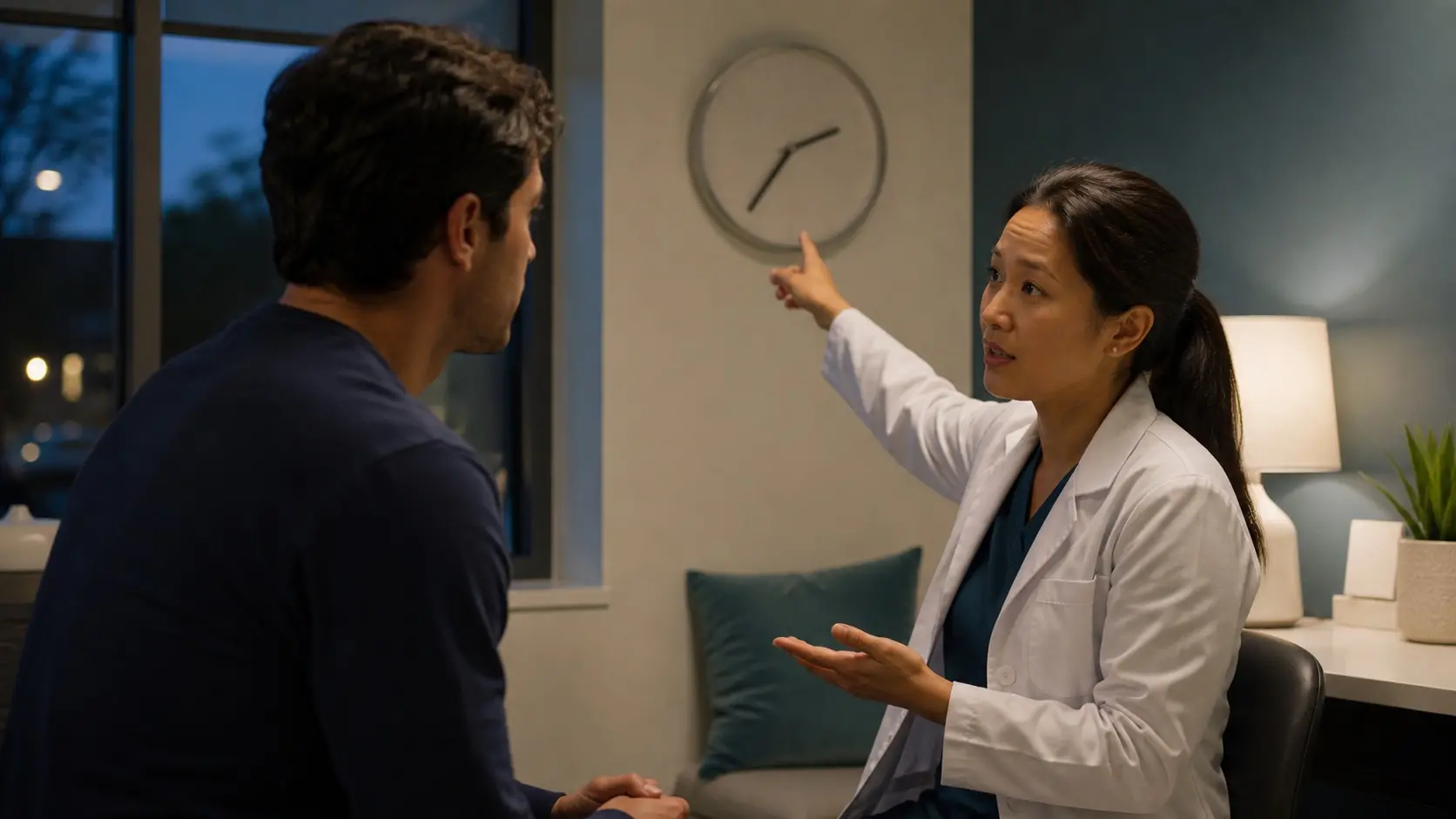
Post-exposure prophylaxis, or PEP, is medicine used to help prevent HIV after a recent possible exposure. Timing is critical. CDC guidance says PEP should be started as soon as possible and no later than 72 hours after exposure. The 72-hour limit is not a target for waiting; every hour matters. If you think a qualifying exposure may have occurred, contact a health care provider, urgent care center, or emergency department immediately.
PEP is different from PrEP and ART. PrEP is ongoing prevention taken before possible exposure by people who do not have HIV. ART is treatment for people who have HIV. PEP is an emergency, time-limited prevention course for a person who does not have HIV or does not know their status after a recent potential exposure.
Do Not Wait to Calculate the Risk Alone
People often lose valuable time trying to decide whether an exposure was “bad enough.” A clinician evaluates the type of body fluid, route of contact, timing, source information, and other factors. Examples that may warrant an urgent PEP assessment include certain sexual exposures, sharing injection equipment, sexual assault, and workplace contact through nonintact skin or a needlestick.
Not every contact carries meaningful HIV risk. Saliva, sweat, tears, urine, and nasal secretions without blood generally do not present the same risk as blood or certain sexual fluids. But online descriptions cannot account for every detail. If the event is within 72 hours and you are unsure, seek a professional assessment now.
Do not delay because the source person’s HIV status is unknown. CDC clinical guidance allows a case-by-case decision when source status is unknown. Similarly, do not wait for a laboratory result that will take days if a clinician believes PEP is indicated. Current CDC guidance emphasizes prompt initiation; testing and follow-up continue around the first dose.
Where to Seek PEP
PEP may be available through emergency departments, urgent care centers, sexual health clinics, infectious-disease clinics, and some community health centers. Availability can differ by location and time of day. Call before traveling if doing so will not cause delay, and ask specifically whether the facility can start HIV PEP today.
Use an emergency department when other qualified services are closed, when the exposure is associated with assault or injury, or when immediate medical evaluation is otherwise needed. For occupational exposure, follow the workplace protocol and seek medical attention immediately. Reporting a workplace exposure should not replace clinical evaluation.
When calling, use clear language: “I may have had an HIV exposure at approximately [time], and I need an urgent PEP evaluation.” You do not need to provide intimate details to a receptionist. Ask how quickly a clinician can evaluate you and whether an initial supply is available onsite.
What to Bring to the Evaluation
Bring identification and insurance information if available, but do not stay home searching for paperwork. More important information includes the approximate date and time of exposure, what happened, any barrier protection used, whether blood was present, known information about the source, current medicines and supplements, allergies, kidney or liver conditions, pregnancy status or possibility, and prior PrEP or PEP use.
If the exposure involved assault, you may be offered additional medical, forensic, advocacy, and safety services. You can ask for a confidential advocate and a clear explanation before each step. The priority is your health and informed choice.
Do not pressure or attempt to test the source person yourself. A clinician or public-health professional can explain appropriate testing and confidentiality. Source information may inform the assessment, but your care should not be delayed while trying to obtain it.
What the Clinician May Assess
The clinician determines whether the exposure presents a substantial risk and whether PEP is appropriate. Baseline HIV testing is generally performed because PEP is intended for people who do not have HIV. Additional testing may include kidney and liver function, hepatitis B and C, pregnancy when applicable, and other sexually transmitted infections. The exact workup depends on the situation and current guidelines.
PEP usually consists of a combination of antiretroviral medicines taken for 28 days. The prescribed regimen should be selected by a qualified clinician who can consider medical history, interactions, pregnancy, and kidney or liver function. Do not use leftover PrEP, another person’s ART, or medicine bought from an unverified source as a substitute.
CDC’s 2025 nonoccupational PEP guidance recommends providing the first dose as soon as possible, ideally within 24 hours and no later than 72 hours, when PEP is indicated. The initial dose should not be delayed while awaiting laboratory-based test results. A clinician may stop or modify the plan later if results change the assessment.
Completing the 28-Day Course
Starting is only the first step. Take PEP exactly as prescribed for the full 28-day course unless the treating clinician changes the plan. Ask what to do if a dose is late, how to manage nausea or other side effects, and whom to contact after hours. Most people tolerate current regimens, and side effects can often be managed.
Set a daily reminder and arrange the full supply before the starter pack runs out. Some facilities provide only several days at first. Confirm which pharmacy will dispense the remainder, whether prior authorization is needed, and when the follow-up appointment occurs. Call early if the prescription is delayed.
While taking PEP, follow the clinician’s advice on risk reduction, including condom use and safer injection practices. PEP does not prevent other sexually transmitted infections or pregnancy, and it is not guaranteed to prevent HIV in every case.
Follow-Up Testing Matters
An initial negative HIV test does not necessarily rule out infection from the very recent exposure because tests have window periods. Follow-up testing is therefore part of PEP care. The schedule can depend on the tests used and current guidelines. Attend every recommended visit and tell the clinician about new exposures, missed doses, symptoms, or use of PrEP after PEP.
Do not interpret fever, fatigue, rash, or other nonspecific symptoms on your own. Many conditions can cause them. Contact the clinic for appropriate evaluation rather than assuming that PEP failed or stopping medicine.
Keep a simple record of dose times, side effects, appointments, tests, pharmacy communications, and insurance decisions. This helps the care team solve problems and prevents details from being lost during a stressful month.
Paying for PEP
Coverage varies. Private insurance, Medicaid, workplace coverage for occupational exposures, assistance programs, or other resources may help. After sexual assault, additional payment programs may apply. Ask the facility for a benefits navigator, social worker, or pharmacist who understands PEP access.
Cost questions should be addressed immediately but should not delay a time-sensitive medical evaluation. Ask for the cash price, insurance status, prior-authorization requirements, assistance options, and cost of follow-up visits and tests. Do not assume that the emergency-department bill includes the entire 28-day medication supply.
When to Discuss PrEP
PEP is designed for emergencies, not frequent recurring exposure. If future exposure is possible, ask about transitioning to PrEP. CDC guidance notes that people with recurrent risk may move from a completed 28-day PEP course to PrEP with appropriate testing and clinical supervision.
PrEP options and monitoring depend on individual circumstances. A clinician can review HIV testing, kidney health for certain oral options, hepatitis status, pregnancy considerations, adherence preferences, and insurance access. The transition should be planned so there is no unnecessary prevention gap.
A Rapid Action Checklist
If the possible exposure occurred within 72 hours:
- Note the approximate time and basic facts.
- Contact a qualified provider immediately.
- Ask specifically for an urgent HIV PEP assessment.
- Bring your medicine list and known medical conditions.
- Do not wait for the source person to obtain testing.
- If PEP is prescribed, confirm how to obtain all 28 days.
- Schedule follow-up before leaving.
- Ask about PrEP if future exposure may occur.
The central message is simple: possible HIV exposure is time-sensitive, and a clinician—not an online risk calculator—should decide whether PEP is indicated. Seek care promptly, take the prescribed course consistently, complete follow-up testing, and use the visit to build a longer-term prevention plan.
Sources
- CDC: Preventing HIV with PEP
- CDC HIV Nexus: Clinical Guidance for PEP
- CDC 2025 Nonoccupational PEP Guidelines
This article offers general education and is not a medical diagnosis. If exposure may have occurred within 72 hours, seek professional care immediately.